Executing a structural flatwork project successfully requires understanding the critical chemical science behind concrete curing and strength development. Property owners across Snohomish County often mistake concrete drying for curing, unaware that proper moisture retention dictates ultimate structural integrity. As liquid concrete transitions into a solid, rock-hard matrix, continuous hydration reactions build dense crystalline structures that resist cracking and wear. Knowing how local coastal weather, ambient humidity, and temperature shifts impact curing schedules helps property owners protect their hardscaping investments. Smart construction planning always includes dedicated moisture curing routines engineered for Pacific Northwest climate demands.
Understanding the Science of Hydration and Initial Setting
Concrete does not harden through simple air drying; rather, it gains structural strength through a complex exothermic chemical process known as hydration. When Portland cement powder mixes with water, microscopic chemical reactions begin immediately, binding crushed aggregates and sand into a solid matrix. Initial setting typically occurs within two to four hours after mixing, during which the material loses its plasticity and becomes rigid. However, achieving initial set only means the slab can no longer be easily shaped or troweled; it possesses virtually zero structural load capacity. Consequently, understanding that drying and curing are entirely different processes prevents premature loading and structural failure.
Environmental conditions in coastal regions like Everett, including morning fog, damp sea air, and fluctuating ambient temperatures, directly influence early-stage hydration rates. High humidity slows down surface evaporation, which benefits early hydration, while freezing temperatures halt chemical reactions entirely. Professional installation crews monitor weather forecasts closely before placing liquid concrete to ensure optimal curing conditions. Skipping proper moisture protection during the first twenty-four hours causes surface dusting, flaking, and severe structural weakening. Therefore, managing early environmental exposure represents a vital phase of professional flatwork installation.
The 28-Day Curing Timeline and Strength Development Milestones
Achieving seventy percent of a concrete slab’s specified compressive strength typically requires approximately seven days of uninterrupted moisture retention. Standard 4,000 PSI mix designs reach roughly fifty percent of their final strength within the first three days following placement. During this critical first week, heavy foot traffic, construction equipment, and pet paws must be strictly prohibited from accessing new surfaces. Allowing tradespeople or homeowners to walk across immature slabs can permanently scar finishing trowel marks and damage delicate surface textures.
Reaching one hundred percent of specified compressive strength and maximum wear resistance requires a full twenty-eight-day curing timeline. While pedestrian traffic is generally permitted after twenty-four to forty-eight hours, heavy passenger vehicles should stay off new driveways for at least seven to ten days. Furthermore, parking heavy delivery trucks, moving vans, or RVs on residential concrete requires waiting the full twenty-eight-day structural maturity period. Respecting structural maturity milestones guarantees long-term load-bearing performance and crack resistance.
Moisture Retention Methods and Protective Curing Compounds
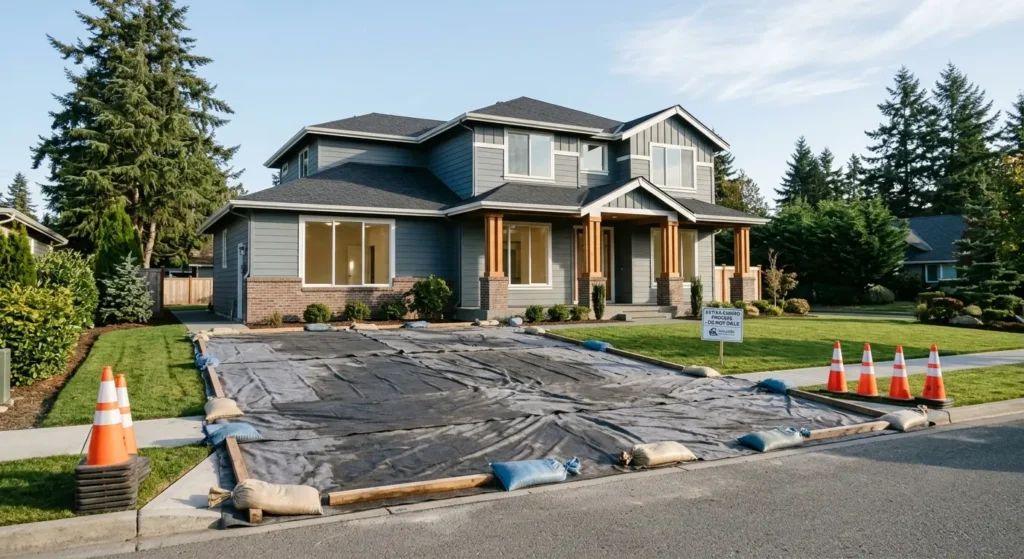
Ensuring complete chemical hydration requires keeping poured concrete consistently damp or sealed against rapid moisture evaporation during the first week. Professional construction teams frequently apply high-grade liquid membrane-forming curing compounds directly over freshly finished surfaces immediately after final texturing. These specialized liquid chemicals form a temporary micro-film that traps internal mixing water, preventing premature evaporation under sunlight or wind. Alternatively, covering fresh slabs with damp burlap sheets, geotextile blankets, or weighted polyethylene sheeting provides exceptional moisture retention for residential projects.
Moreover, applying penetrating or topical acrylic sealers after the initial curing window protects mature concrete against freeze-thaw scaling and oil absorption. Quality sealers lock in residual moisture during early stages while creating an impenetrable hydrophobic shield against winter precipitation. When ambient temperatures drop below fifty degrees Fahrenheit, curing reactions slow down significantly, requiring extended protection periods and specialized mix additives. Experienced trade craftspeople adjust curing protocols based on real-time weather data to guarantee maximum structural durability. Proper moisture management ensures your hardscape withstands heavy daily use without structural degradation.
Evaluating Quality Installation Practices and Professional Standards
Executing flawless flatwork installation and managing precise curing timelines requires advanced technical skill and extensive hands-on experience. Professional installers understand how sub-base compaction, mix design,n water-cement ratios, and curing methods interact under local weather patterns. Adding excess water to concrete mixes on-site to ease placement severely reduces final compressive strength and accelerates surface cracking. Working with seasoned installation experts guarantees strict adherence to engineering standards, proper mix specifications, and rigorous curing protocols.
When planning your residential concrete project, reviewing past local project galleries and client testimonials offers clear insight into contractor reliability. Top-tier teams utilize commercial-grade curing blankets, high-performance liquid membranes, and professional finishing equipment to deliver superior structural results. Superior craftsmanship transforms basic outdoor spaces into durable, stylish, and highly functional residential assets. Selecting expert installation teams ensures your investment adds lasting value and structural integrity to your property.
Build with Confidence Alongside Everett Concrete Experts
Constructing durable, weather-resistant concrete installations requires specialized regional expertise, top-tier materials, and unwavering dedication to professional craftsmanship. At Everett Concrete Experts, we take immense pride in managing every phase of concrete pouring and curing with absolute precision. Our experienced team handles all technical details, from sub-base grading and steel reinforcement placement to precise mix pouring and rigorous moisture curing protocols. Whether you need a new driveway, custom patio, walkway, or garage floor, we provide full insurance coverage, transparent pricing, and guaranteed quality. Contact Everett Concrete Experts today to schedule your consultation and build a hardscape engineered to last a lifetime.
Pingback: Shed & Garage Concrete Slabs in Everett, WA