Maintaining a secure residential property requires paying close attention to the structural health of your underlying concrete footings and foundation walls. Homeowners across Snohomish County often notice minor home shifts without realizing that underlying soil movement threatens building stability. Persistent rainfall, coastal moisture, and seasonal freeze-thaw cycles exert immense pressure against residential stem walls and footings over time. Recognizing subtle early warning signs allows property owners to intervene quickly before minor cosmetic blemishes turn into catastrophic structural failures. Early identification of foundation stress protects your family’s safety, prevents compounding repair expenses, and preserves overall property value.
Understanding Exterior Cracks and Structural Wall Movement
Inspecting exterior stem walls regularly offers clear insight into underlying structural health and soil stability around your home. Visual indicators such as horizontal wall fractures, stair-step masonry cracks, and diagonal corner splits signal significant structural stress. Horizontal cracks along stem walls are particularly concerning, as they typically indicate intense lateral soil pressure pushing inward against concrete footings. As heavy coastal rain saturates surrounding soil, expansive earth exerts relentless force that eventually bows and fractures unreinforced basement walls. Consequently, discovering horizontal or bowing stem wall cracks means you urgently need professional evaluation to prevent structural collapse.
Stair-step cracks following brick mortar joints or diagonal fractures near home corners point to differential foundation settlement. Differential settlement occurs when portions of a home rest on shifting soil densities, causing sections of footings to sink downward. Uncompacted backfill soil and subterranean water movement erode supporting gravel, leaving hollow air pockets beneath heavy concrete pads. Ignoring expanding exterior wall cracks allows rainwater to penetrate the internal concrete matrix, rusting internal rebar and accelerating structural breakdown. Therefore, scheduling a thorough structural inspection at the first sign of exterior cracking remains an essential protective measure.
Recognizing Interior Warning Signs near Port Gardner
Properties situated near coastal areas like Port Gardner Bay or Forest Park contend with high water tables and steep terrain slopes. Interior home warning signs often emerge gradually, manifesting as sticking interior doors, jamming window frames, or newly formed drywall cracks. When concrete footings shift or settle unevenly, underlying timber framing twists out of square alignment throughout the house. Doors that previously swung smoothly may begin sticking against doorframes or refusing to latch properly. Monitoring internal architectural shifts helps identify foundation movement long before major structural failures become visible from the outside.
Floor irregularities provide another reliable indication that underlying stem walls or post-and-beam piers are losing structural stability. Homeowners may notice sloping hardwood floors, bouncing floorboards, or widening gaps between baseboards and flooring materials. In homes built over crawlspaces, excess moisture accumulation weakens supporting wooden posts and concrete pier pads, causing central floor sag. Gaps opening between interior walls and ceilings also indicate that peripheral concrete footings are sinking downward away from upper structural framing. Addressing interior structural warnings promptly prevents extensive damage to interior drywall, plumbing pipes, and roof structures.
Managing Water Seepage and Hydrostatic Pressure Risks
Coastal rainstorms deliver continuous moisture that accumulates around residential home perimeters, creating intense hydrostatic pressure against basement walls. Liquid water seeks microscopic pores, forms tie holes, and cold joints within aged concrete walls, leading to persistent subterranean leaks. Internal water intrusion manifests as damp basement walls, standing crawlspace puddles, persistent musty odors, or powdery white efflorescence on concrete surfaces. Mineral efflorescence deposits indicate that moisture is moving continuously through porous concrete walls, leaching cement binders and weakening structural integrity over time.
Improper perimeter drainage systems compound water seepage risks by allowing roof runoff to pool directly adjacent to foundation walls. Clogged gutters, short downspout extensions, and negative yard grading direct thousands of gallons of rainwater against concrete stem walls. Prolonged saturation softens sub-base soil while compounding lateral earth pressure against underground concrete footings. Installing perimeter French drains, exterior waterproofing membranes, and sump pump systems relieves hydrostatic pressure, channeling groundwater safely away from your home. Combining effective drainage management with professional concrete foundation repair eliminates water-driven foundation damage permanently.
Evaluating Modern Structural Repair Technologies and Techniques
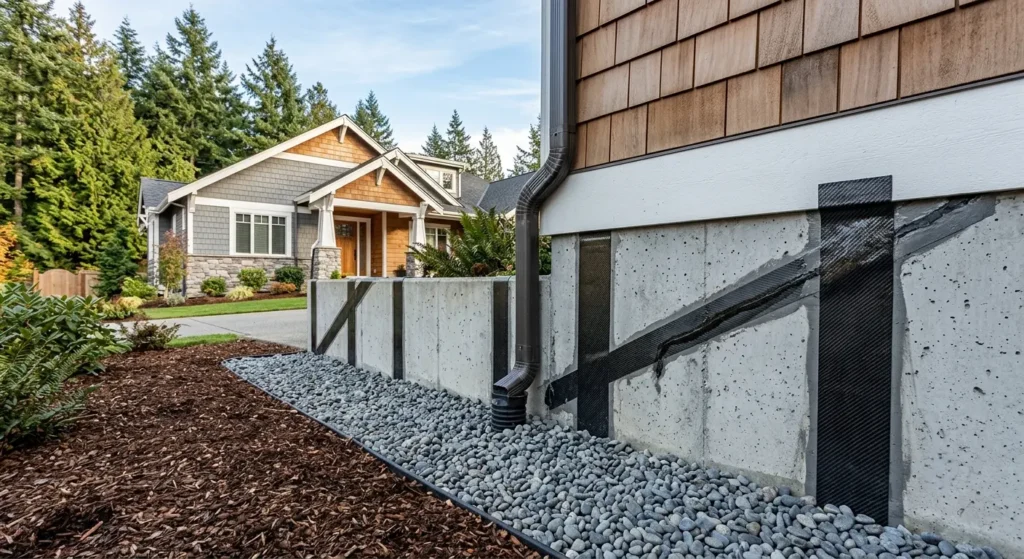
Remediating structural foundation damage requires specialized technical knowledge, heavy-duty engineering products, and precise execution by trade professionals. Modern structural repair methodologies resolve underlying soil instability and stem wall fractures without requiring complete building demolition. High-pressure polyurethane or epoxy crack injections seal small vertical fissures completely, restoring structural strength and preventing future water entry. For bowed basement walls suffering from lateral soil pressure, installing carbon fiber reinforcement straps or heavy steel wall braces stabilizes concrete walls permanently.
Properties experiencing severe settlement require deep underpinning systems to transfer structural building weight down to dense, stable soil layers. Heavy helical piers or steel push piers are driven deep into stable sub-grade soil layers beneath sinking concrete footings. Hydraulically lifting building footings back toward original level positions closes drywall cracks, lifts sloping floors, and restores structural alignment. Partnering with experienced structural trade professionals guarantees that repair plans address root environmental causes rather than temporary surface symptoms.
Protect Your Structural Health with Everett Concrete Experts
Safeguarding your home against expansive soil movement, water seepage, and differential settlement demands deep regional experience and unyielding commitment to engineering quality. At Everett Concrete Experts, we specialize in diagnosing structural distress and delivering permanent foundation repair solutions tailored specifically for coastal Northwest properties. Our expert team evaluates stem wall fractures, crawlspace piers, and perimeter drainage systems thoroughly, providing honest recommendations and guaranteed workmanship. Whether you need high-strength epoxy crack injections, carbon fiber wall stabilization, crawlspace encapsulation, or heavy-duty steel piering, we provide full insurance protection, transparent pricing, and complete peace of mind. Contact Everett Concrete Experts today to schedule your comprehensive structural evaluation and protect your home’s future.